Back
Proxy for Telegram in 2026: SOCKS5 vs MTProto, Setup on Any Device
Last updated: July 24, 2026
Quick answer: Telegram has native proxy support built into every app — no extra software needed. It accepts two types: SOCKS5 (a standard proxy that works for everything, including Telegram) and MTProto (Telegram's own protocol, designed to disguise the traffic itself). For simply restoring access, a private SOCKS5 proxy is the reliable choice; for running multiple Telegram accounts, you need one dedicated IP per account, same as on any platform. Setup for each device is below — it takes two minutes.
Why people need a proxy for Telegram
Country-level blocks and throttling — several countries block Telegram outright or degrade it to unusability during "events."
Corporate and university networks — Telegram is a common target of workplace firewalls.
Multiple accounts — marketers, channel admins, and support teams running several Telegram accounts need separate IPs to avoid linking and spam-blocks.
Privacy — hiding your real IP from Telegram's servers and from any peer-to-peer calls.
SOCKS5 vs MTProto: which one to use
SOCKS5 | MTProto | |
|---|---|---|
What it is | Universal proxy protocol, works with any app | Telegram-only protocol that camouflages traffic as random noise |
Best for | Reliable private access, multi-account work, reuse for other apps | Networks with deep packet inspection (DPI) that detect and kill SOCKS5 connections |
Auth | Login + password | Secret key |
Where to get | Any proxy provider — you control it | Mostly free public lists and channels |
The catch | Plain SOCKS5 is detectable by advanced DPI | Free public MTProto servers see all your connection metadata, die constantly, and inject sponsored channels into your chat list |
The practical rule: start with a private SOCKS5 — it's faster, it's yours alone, and it works for everything else too. Reach for MTProto only if your network's DPI actively breaks SOCKS5 connections. And avoid free public proxies of either type: an unknown operator between you and your messenger is a privacy downgrade, not an upgrade.
Setting it up (built into Telegram, 2 minutes)
You'll need four values from your proxy provider: host, port, username, password.
Telegram Desktop: Settings → Advanced → Connection type → Use custom proxy → SOCKS5 → enter host, port, username, password → Save. A shield icon appears in the bottom bar when active.
Android: Settings → Data and Storage → Proxy Settings → Add Proxy → SOCKS5 → fill in the four fields → save and toggle on.
iOS: Settings → Data and Storage → Proxy → Add Proxy → SOCKS5 → fill in → enable.
Telegram also understands one-tap links in the format tg://socks?server=HOST&port=PORT&user=USER&pass=PASS — handy for rolling a proxy out to a whole team: send the link, everyone taps once.
Note: the proxy in Telegram's settings routes only Telegram. Your browser and other apps are unaffected — which is exactly what you want if the rest of your connection is fine.
Multiple Telegram accounts: the IP rule applies here too
If you manage several accounts (channel networks, support seats, outreach), Telegram's anti-spam watches IPs like every other platform. Accounts sharing one IP get linked; when one catches a spam-block, its IP neighbors are next in line. The setup that holds:
One account = one dedicated proxy. Telegram Desktop supports per-session proxies, and antidetect browsers / multi-account tools let you bind a proxy per profile with Telegram Web.
Residential or mobile IPs, not datacenter. Fresh registrations and "warm" activity from home/carrier IPs survive; datacenter ranges eat instant spam-blocks, especially on new accounts.
GEO consistency. An account registered with a +33 number that always connects from a German datacenter IP is asking for verification. Match the proxy country to the account's number and audience.
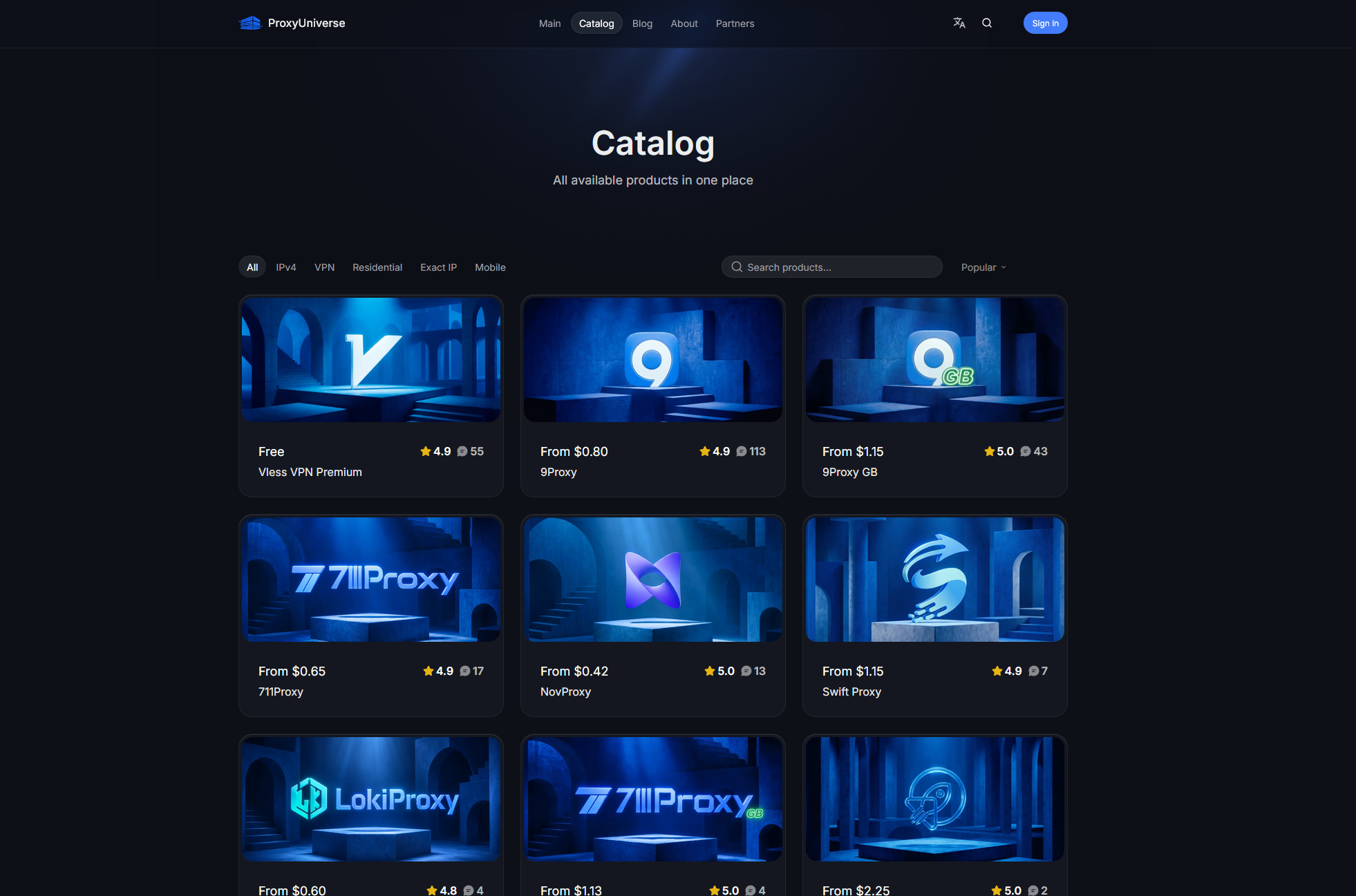
Dedicated SOCKS5-capable residential and mobile proxies with country selection cover both cases — single-account access and multi-account isolation. Every proxy in the catalog ships with login/password auth, which is exactly what Telegram's built-in SOCKS5 field expects.
FAQ
Is a proxy better than a VPN for Telegram?
For Telegram specifically — usually yes. The proxy is built into the app, routes only Telegram (no slowing everything else), works per-account, and a private SOCKS5 isn't on public VPN blocklists.
Are free MTProto proxies safe?
They function, but the operator sees your metadata, uptime is a lottery, and most inject a sponsored channel into your list. Fine for a one-day emergency, wrong for daily use.
Does a proxy protect my messages?
Telegram's own encryption protects message content regardless. The proxy hides your IP and gets you past blocks — it neither weakens nor replaces the encryption.
Why is my Telegram proxy slow?
Usually a free/overloaded server or a distant GEO. A private proxy in a nearby country fixes both; for calls and voice chats, closer is better.
Which proxy for many Telegram accounts?
One dedicated residential or mobile IP per account, country matched to the phone number. Pick them in the catalog — SOCKS5 with login/password works natively in every Telegram app.