Back
How Telegram Expert Helps You Work with Your Audience After Attracting Subscribers
Monetizing a Telegram Channel: How Telegram Expert Helps You Work with Your Audience After Attracting Subscribers
The ability to attract subscribers helps launch Telegram projects, but by itself it does not guarantee revenue. When you work for a client, results are measured against agreed terms—for example, by the number of accepted subscriptions. In your own project, earnings depend on what the audience does next. A person needs to become interested in the offer, move to the next step, and complete the target action.
That is why audience work after the subscription matters just as much as acquisition. Start by defining the offer, then study the interests of the people you attracted, prepare suitable materials, and check which actions lead to inquiries and purchases.
Start by Defining the Offer and the Target Action
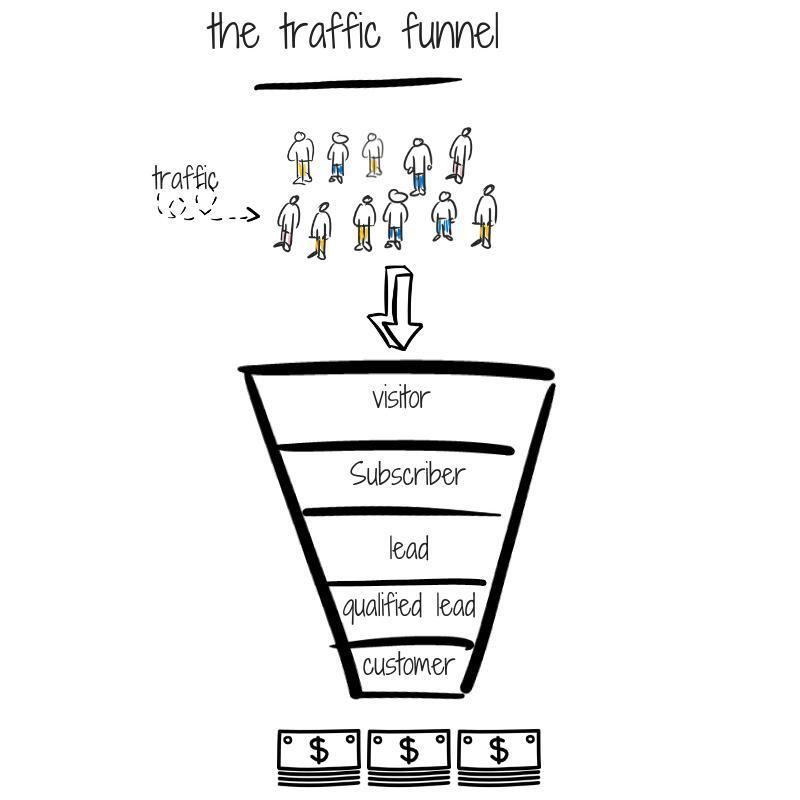
Before launching traffic, define three things: who the project is for, what problem it solves, and which action is expected to generate revenue.
Define the audience. Describe the people who may need your product or service. Consider their interests, needs, and the reasons they may be looking for a solution. The more specific the audience's task is, the easier it is to choose suitable placements and content.
Formulate the offer. This may be your own product, a paid service, a subscription to materials, or an affiliate offer. In the latter case, review the program terms in advance and determine which user action generates the commission.
Define the target action. For one project, this may be a purchase; for another, a consultation request or registration. Clicking a link or sending a direct message can serve as intermediate actions on the path to revenue.
Then evaluate acquisition economics. Cost per subscriber is calculated as total acquisition spend divided by the number of new subscribers. Compare this figure with the revenue generated by the corresponding audience over the selected period. The calculation should also include content production costs, advertising placements, and other operations required to run the project.
This gives you baseline metrics that can be used to compare the results of future launches.
Check What Interest Brings People into the Project
Every traffic source has its own audience. Their interest is shaped by the topic of the placement, the content of the ad, and the reason the person decided to subscribe.
For example, a user may join the channel for a free guide, a selection of services, or entertainment content. Interest in that material does not necessarily mean they are ready to buy the product you offer next. For a sale to happen, the reason for subscribing needs to connect logically with the next offer.
When attracting subscribers for a client, the main criteria may be volume and compliance with acceptance terms. In your own project, you also need to evaluate people's interest in the commercial offer and what they do afterward.
That is why each source should be analyzed separately. If subscribers come from different communities or promotional materials, preserve information about the source and the publication that started the interaction.
You can do this with separate invite links, campaign tags, or a question during the first contact. The exact method depends on where acquisition happens and what data you can access.
Compare sources using several metrics:
How many people entered the project.
How users interact with the materials.
How many people moved to the offer or asked for more information.
How many target actions were confirmed and how much revenue they generated.
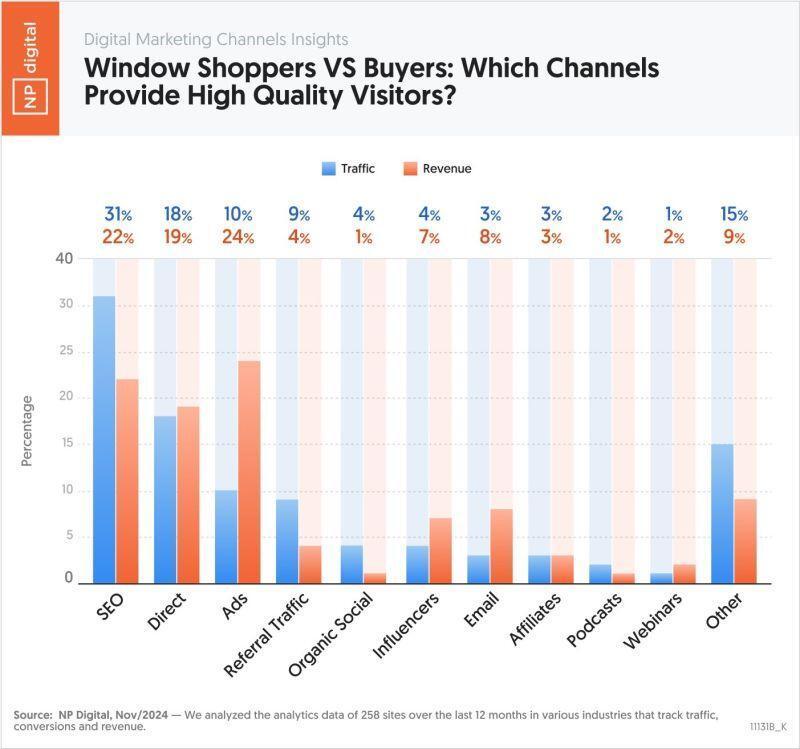
A source's ranking alone does not determine its value for every project. Results depend on the niche, the offer, and the behavior of the specific audience. Choose your primary source based on data from your own launches.
Segment the Audience by Interests and Actions
When several sources bring people into one channel, the combined audience becomes heterogeneous. Some subscribers need instructions, others are researching professional tools, and others are already looking for a specific service.
Create segments using the information available in your project. Signals may include acquisition source, the topic of the publication that brought the person in, a question they asked, a transition to a specific offer, or a consultation request.
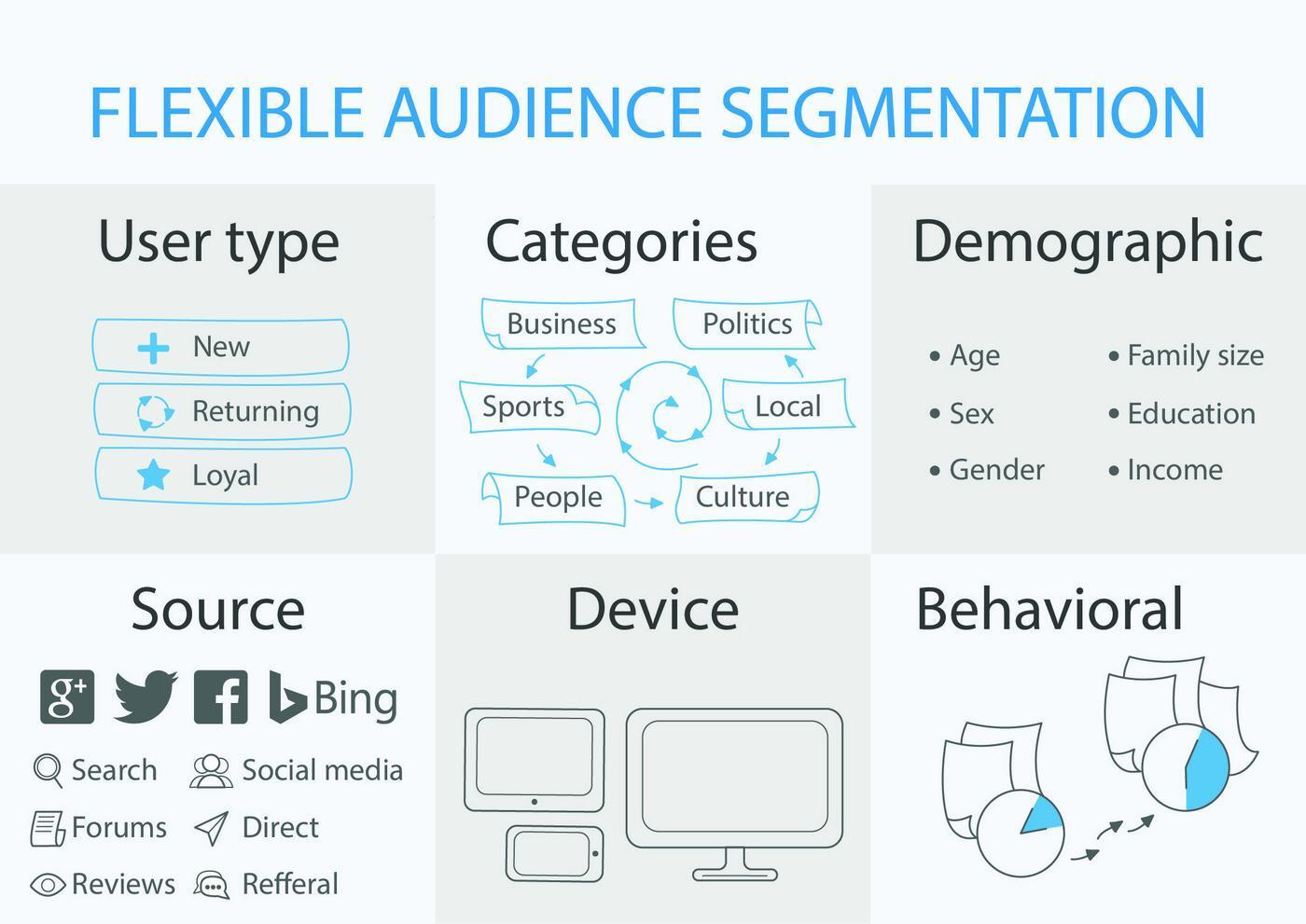
For example, in a project about Telegram promotion, you can separate people who are interested in finding relevant communities, those who are studying audience acquisition methods, and those who ask about automating recurring operations. Each segment needs its own materials and next step.
When working with external communities, it is also useful to consider user activity. A participant who regularly discusses the topic and leaves comments provides more observable signs of interest than someone whose only known signal is group membership. This activity helps you study the audience, while commercial interest should be evaluated by how people respond to the offer.
Keep source data separate so you can compare results later. If all sources are merged into a single database without information about origin, it becomes harder to identify which audience contacts you and buys more often.
Prepare the Next Stage of Communication After Subscription
Once you have defined the segments, create a sequence of materials that takes a person from their initial interest to the offer.
1. Continue the topic that brought the person in.
If a subscriber received a free guide, the next publication can explain one specific step from it in more detail. The reader sees that the channel continues to solve a problem they already recognize.
2. Explain how your offer is used.
Show which part of the task the product solves, how to use it, and what result the user can verify independently. If you offer a service, explain what the work includes and the terms for contacting you. If you promote an affiliate offer, stick to the factual terms of that offer.
3. Offer one clear action.
Depending on the goal, this may be opening the product page, requesting the terms, sending a direct message, or placing an order. The person should understand where to go and what will happen next.
4. Plan how to handle responses.
Questions and objections help clarify what information the audience needs before making a decision. Prepare answers to recurring questions and define when personal communication is required.
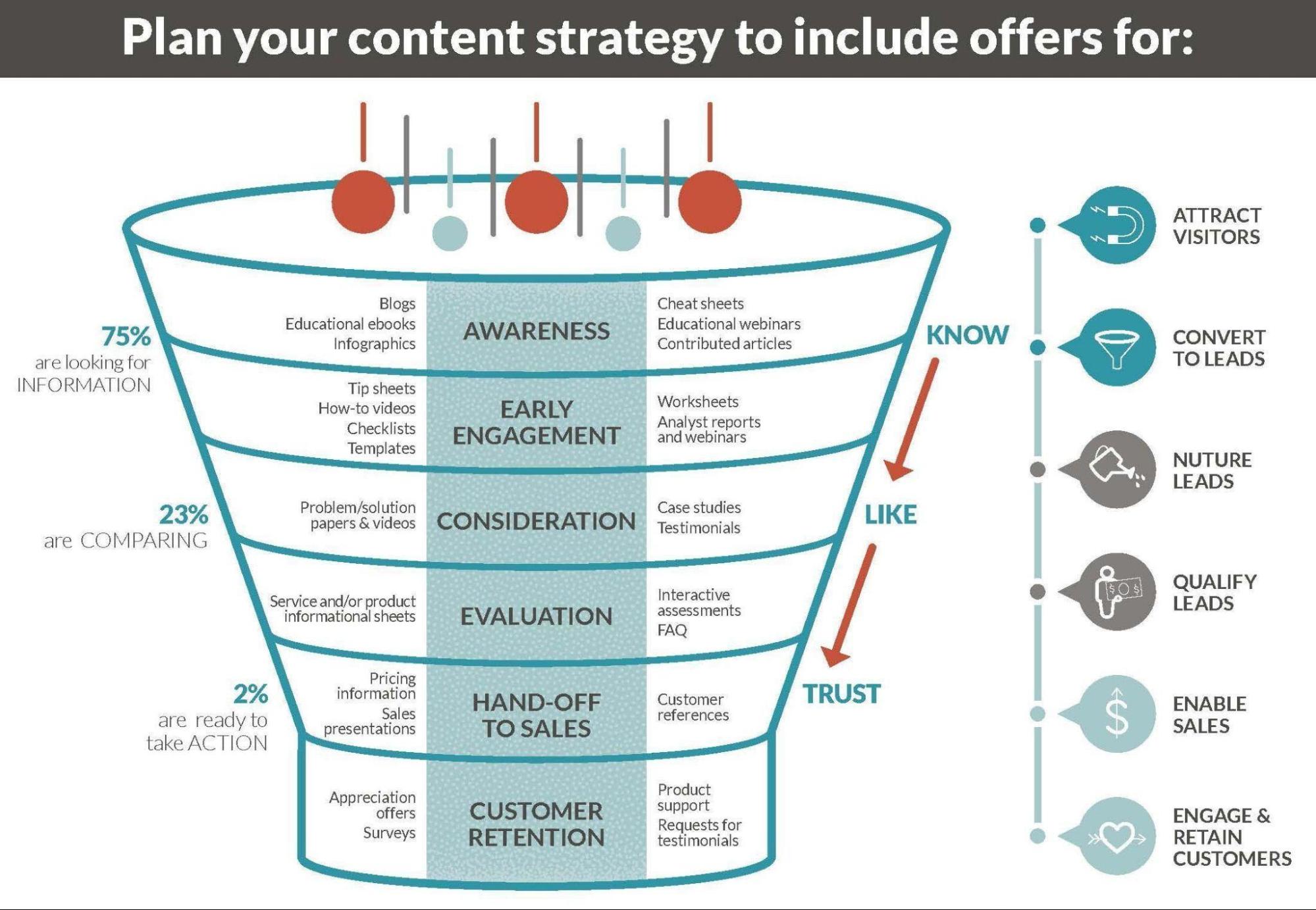
When testing, change one meaningful element at a time. For example, test the publication topic, the offer wording, or the call to action separately. This makes it easier to understand which change caused the difference in results.
How Telegram Expert Helps Research the Audience and Organize Communication
Regular work involves finding relevant communities, studying their members, processing databases, and preparing materials for different segments. After that, you need to publish messages, handle inquiries, and repeat the same operations for future launches.
Telegram Expert is a Windows program that combines tools for automation and promotion in Telegram. In this scenario, it helps organize audience research and recurring operations with prepared data.
Community Search and Database Preparation
The Telegram Expert parser includes a global search for chats, channels, and users by keyword. The program also supports collecting data from groups, channels, and comments.
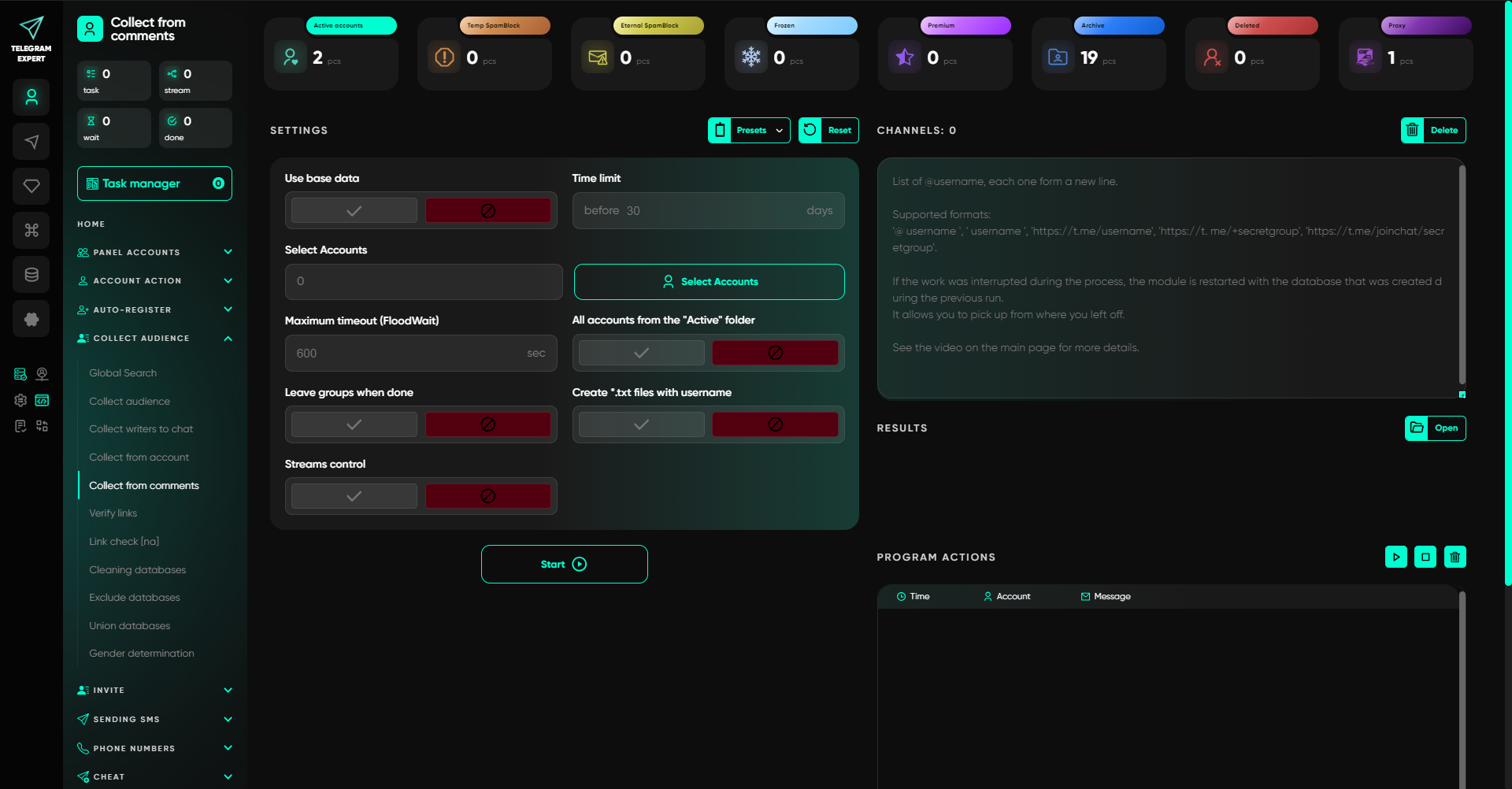
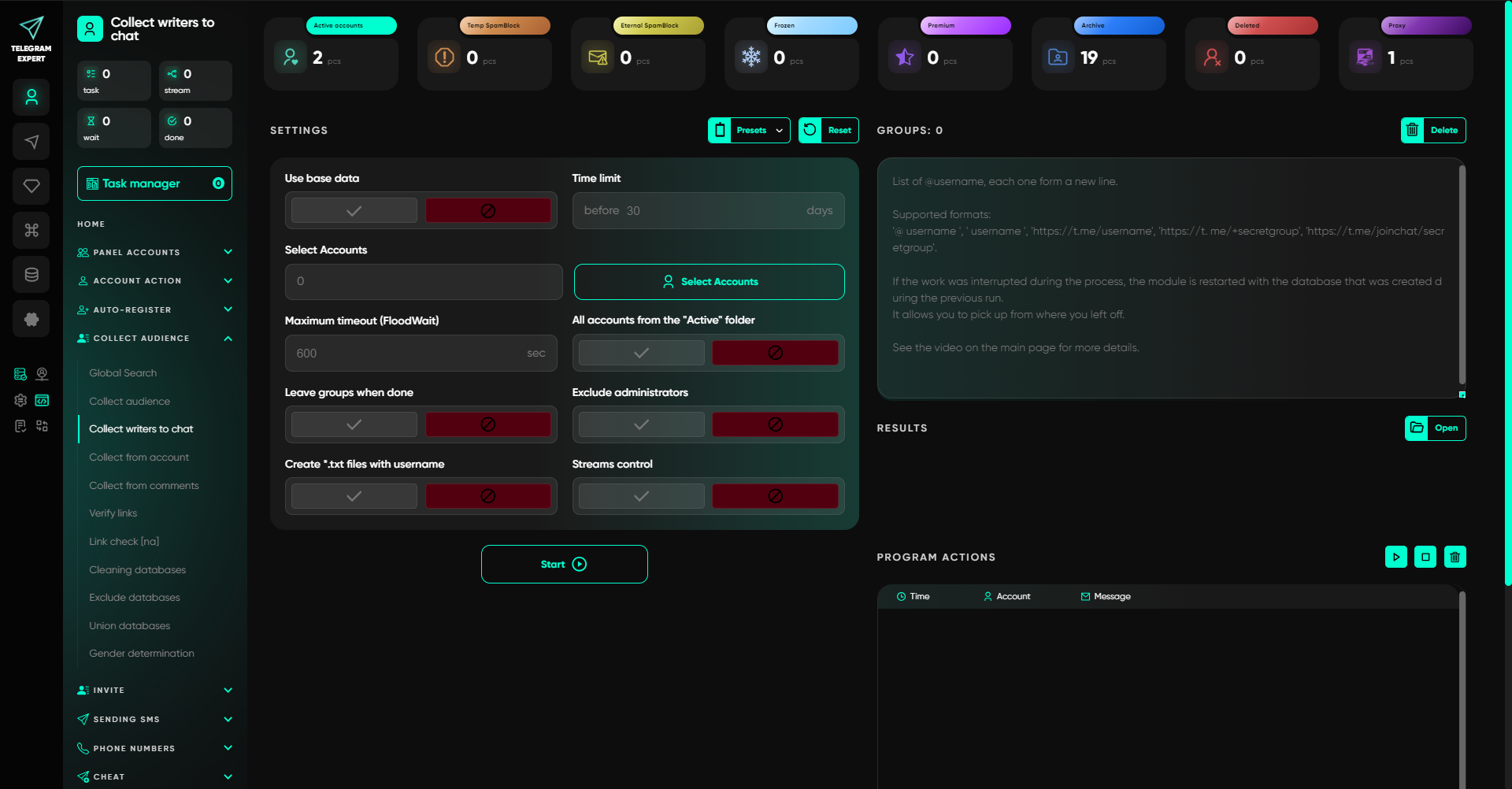
To study interests, you can separately collect members of selected communities, users who posted in chats, and people who left comments under publications. These sources provide different kinds of activity signals.
After collection, the database can be cleaned, links and usernames can be checked, overlaps with other datasets can be removed, and the audience can be split into segments. Telegram Expert supports merging up to five parsing databases.
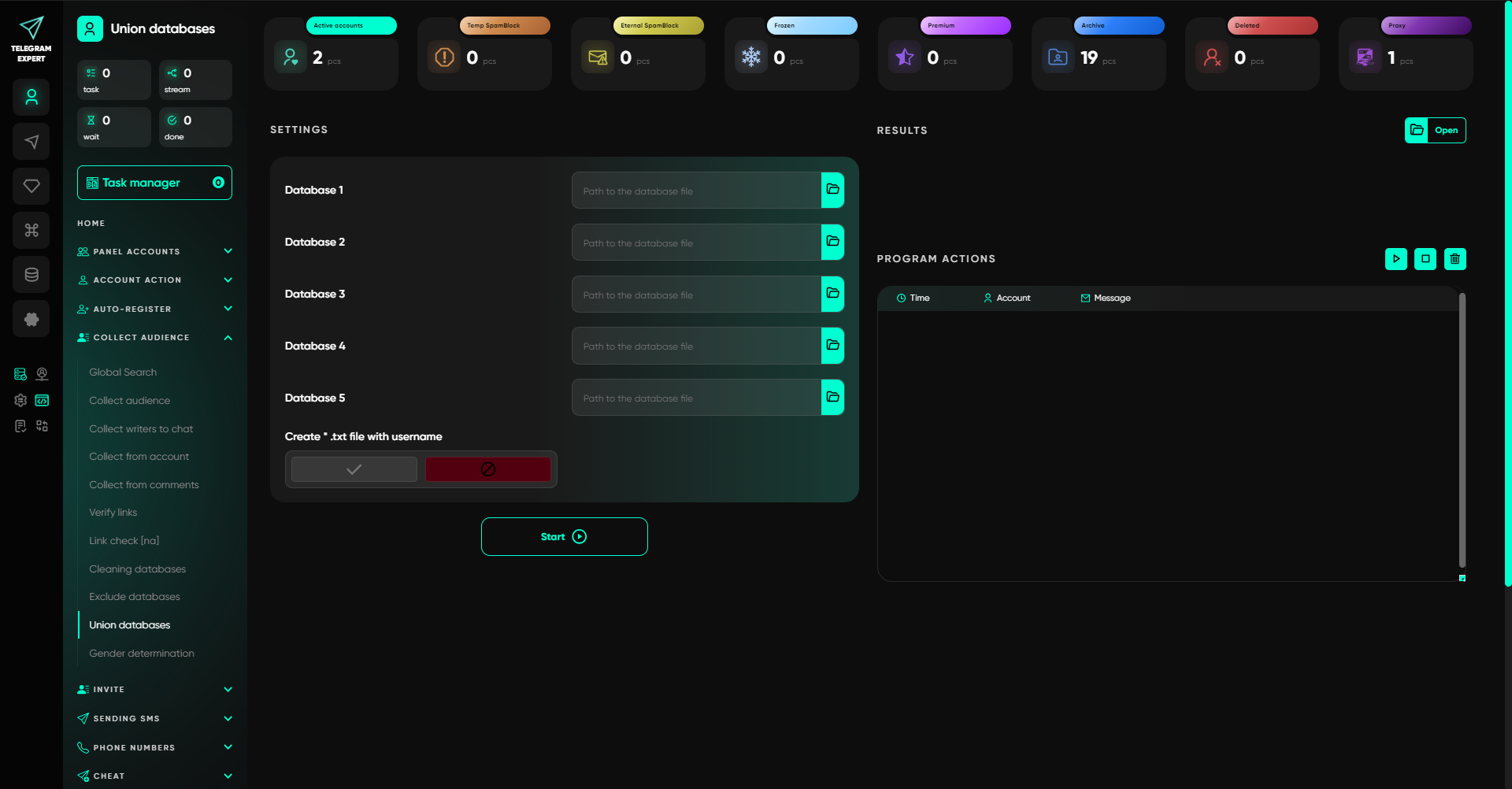
This process helps prepare separate selections for further work. For example, you can study active members of professional communities separately from users who interact with comments under relevant publications.
At the same time, the prepared database remains a source of data for further research. A person's readiness to buy is determined by their response to the offer and by confirmed commercial actions.
Messages, Open Dialogs, and Publications
Once the audience is prepared, you can move on to communication. The Telegram Expert mailing module supports sending messages by username, Telegram ID, phone number, and contacts. Messages can include text, images, video, voice content, and buttons.
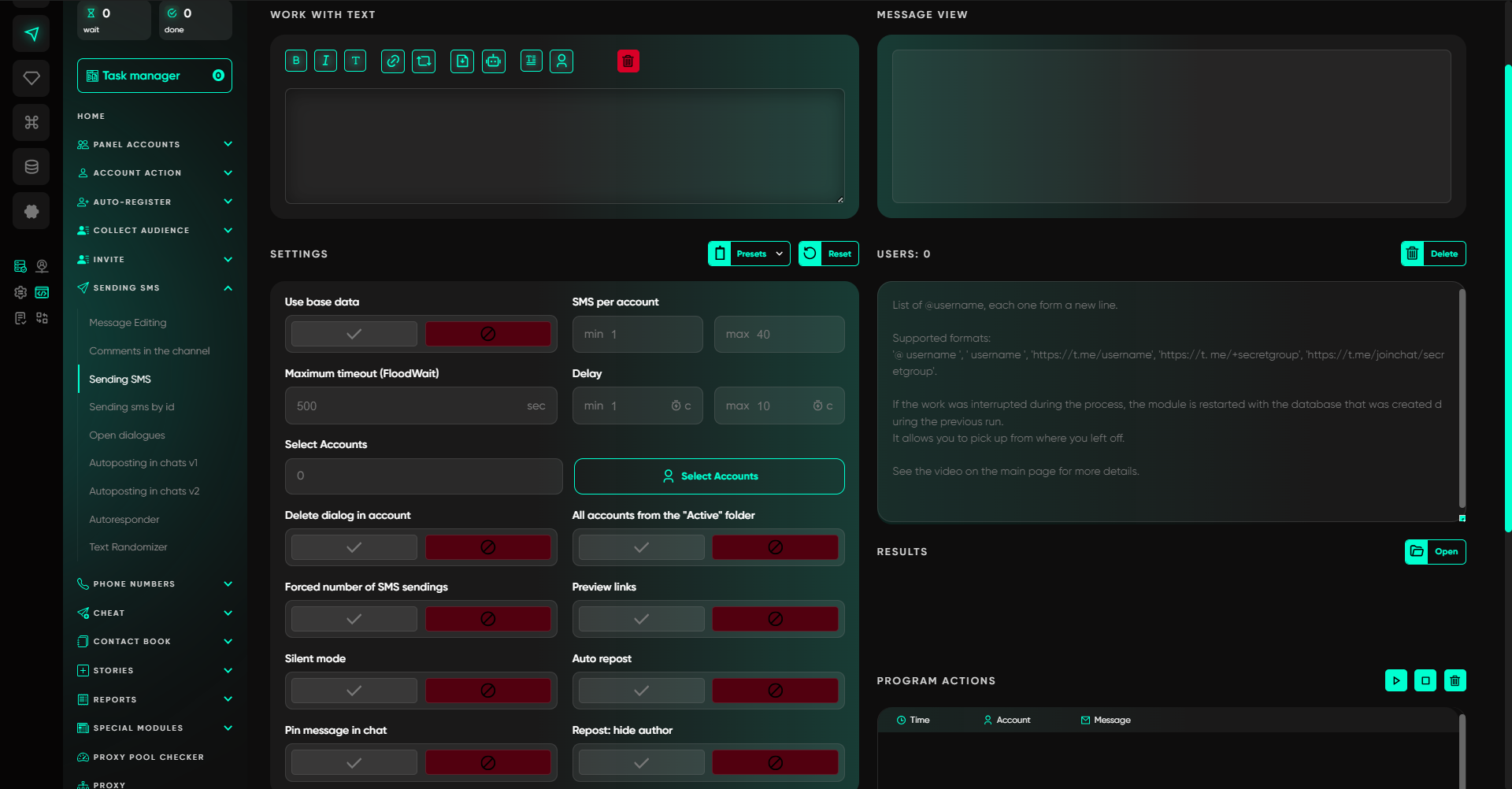
For conversations that have already started, the program supports work with open dialogs. This helps organize recurring operations with existing conversations. The autoresponder helps process typical incoming messages.
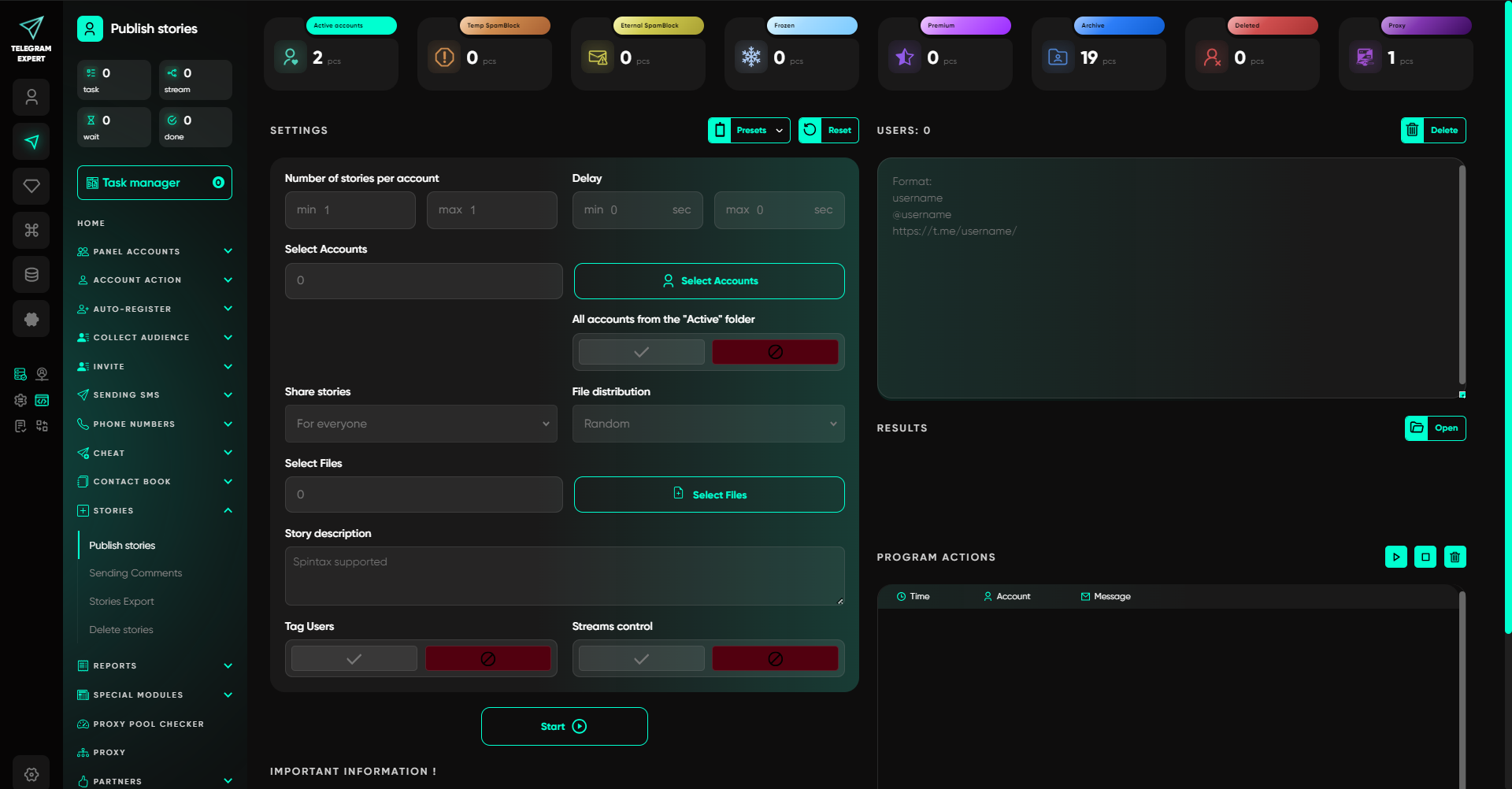
For regular placement of materials in suitable chats and channels, automated posting is available. A separate Telegram Stories lets you publish stories from selected accounts, configure privacy, add mentions and descriptions. After publication, story links can be exported for later verification.
These tools help maintain work with different segments and content formats. The message content, audience selection, and purpose of each contact still need to be prepared separately.
Use appropriate databases and follow Telegram rules and communication requirements. Automation helps execute recurring operations while preserving control over the content and the workflow.
How to Identify Where Interest Is Lost
After launch, collect data for each segment and compare metrics across consecutive stages. This will show where the next check is needed.
Publications are viewed, but people rarely move to the offer. Check the connection between the topic and the offer, the visibility of the link, and the clarity of the call to action.
There are clicks, but few inquiries. Review the page users land on. Check whether its content matches the promise in the publication, whether the terms are clear, and whether the next step is easy to access.
Inquiries come in, but purchases are rare. Analyze potential customers' questions, reasons for refusal, pricing, and the ordering process. This data can help refine the offer and the content of your responses.
The first purchase happens, but repeat inquiries are rare. Check what materials buyers receive after the order, whether the product meets expectations, and whether a useful next step is available.
For an initial analysis, use link clicks, replies, inquiries, CRM or affiliate-program data, and sales statistics. Compare results by source, segment, and period.
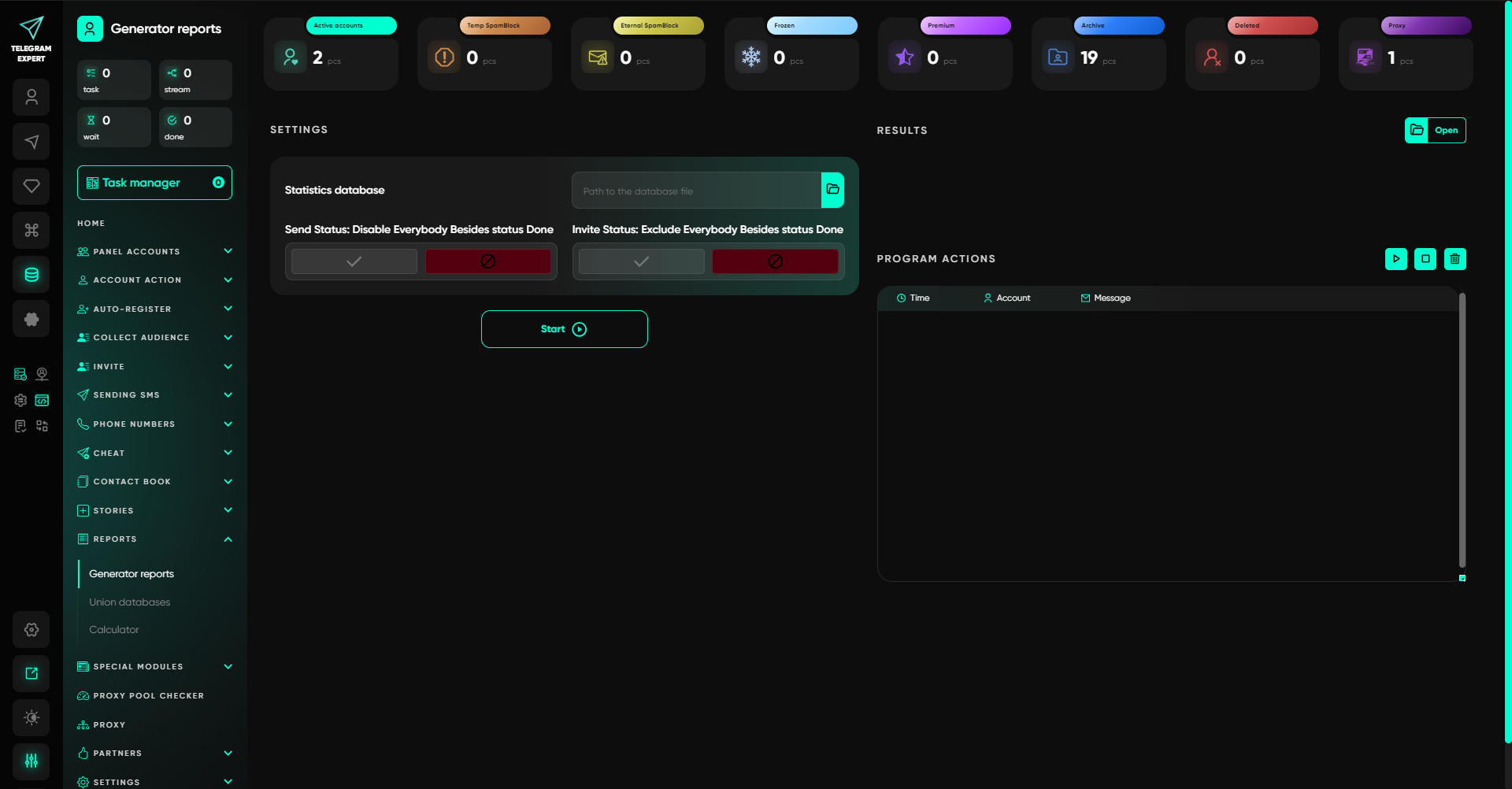
Telegram Expert includes tools for calculating mailing and invitation results, as well as an HTML report generator based on saved result databases. They help consolidate completed-task metrics and compare individual launches. Track clicks, inquiries, purchases, and revenue using the relevant analytics and sales systems.
Ultimately, monitor two groups of metrics. The first describes acquisition and audience work. The second shows the commercial outcome: target actions, actual revenue, and the cost of generating it. Together, they help determine which sources and communication methods are worth using in future launches.
Frequently Asked Questions About Monetizing a Telegram Channel
Why doesn't subscriber growth lead to revenue growth?
A subscription shows that a person decided to join the channel. Revenue depends on their subsequent interest in the offer, clicks, inquiries, and purchases. Check whether the audience's expectations match the project's content and commercial offer.
How do you determine which source brings an interested audience?
Separate sources and compare them based on subscribers' subsequent actions. Track transitions to the offer, inquiries, confirmed target actions, and revenue. Subscriber count alone does not show the economic result.
Should the same messages be sent to every segment?
Choose content based on the initial interest and task of each segment. People who are still exploring the topic may need instructions. Those already asking about the product may benefit more from purchase terms and answers to common questions.
How does Telegram Expert help with audience research?
The parser helps find relevant communities, collect users from groups, channels, and comments, identify active participants, and prepare databases. The data can be cleaned, checked, and segmented before further work.
Does Telegram Expert help evaluate project ROI?
The program provides reports on mailing and invitation results. To calculate ROI, also include acquisition and project-operation costs, data on clicks, inquiries, purchases, and actual revenue. This allows you to compare the commercial performance of different sources and audience segments.