返回
2026 年购买 IPv4 代理:独享、私人与轮换全指南
"Buy IPv4 proxy" sounds simple until you open the catalogs: dedicated, shared, private, rotating, residential, datacenter — with a 10x price spread. Here's the no-fluff breakdown: which IPv4 proxy types exist, which fits which task, what fair pricing looks like in 2026, and how not to overpay.
What is an IPv4 proxy and why it's still the standard
IPv4 is the classic IP address format that every website and every tool understands without exceptions. IPv4 addresses are scarce, which makes them pricier than IPv6 — but many platforms (social networks, classifieds, bookmakers) still reject IPv6. Simple rule: if you're not sure your target site supports IPv6, buy IPv4 — you'll save more on proxies that actually work than you'd save on the price difference.
Dedicated, shared or rotating: how to choose

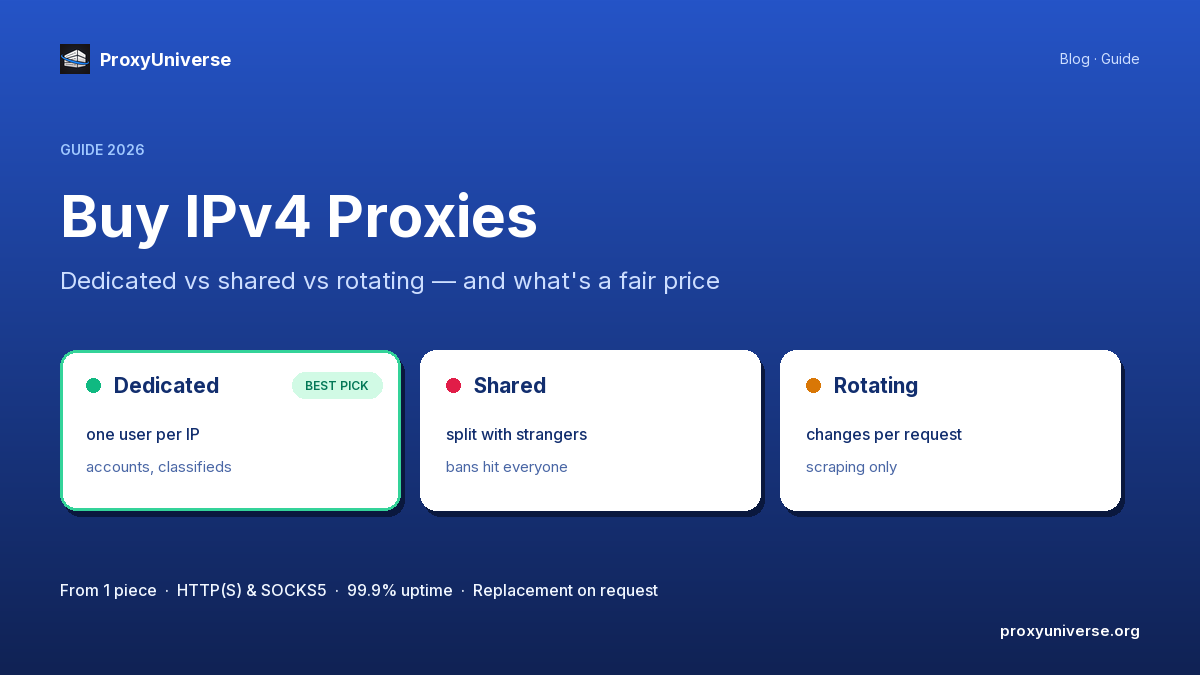
Dedicated (private) — the address is yours alone for the whole rental. Full speed, clean IP reputation under your control. The right pick for accounts, classifieds, SEO tools and any service that expects a persistent address.
Shared — several clients on one IP. Cheaper, but a neighbor can burn the address with spam — and everyone catches the bans. Almost never worth the savings.
Rotating — the address changes per request or on a timer. Built for scraping and bulk tasks; wrong for accounts and IP-bound services. If you're searching "rotating ipv4" — what you actually want is residential GB packs, not datacenter IPv4.
What IPv4 proxies should cost in 2026
The dedicated datacenter IPv4 market runs about $1–3 per address per month from honest providers; anything far above that is brand markup. Our dedicated IPv4 proxies are among the cheapest on the market — own infrastructure, no middlemen, 99.9% uptime. One address per customer, HTTP(S) and SOCKS5, replacement on request, buy from 1 piece, delivered within a minute after crypto or local payment.
What a dedicated IPv4 is good for

Classifieds and marketplaces (a persistent clean address means fewer checks), SEO tools and rank tracking, social and messenger account management (one IP per account), bookmakers and finance services bound to an address, stable connections to panels and APIs. For bulk scraping at thousands of requests per minute, use rotating residential GB packs instead — from $0.85/GB.
How to test an IPv4 proxy after purchase
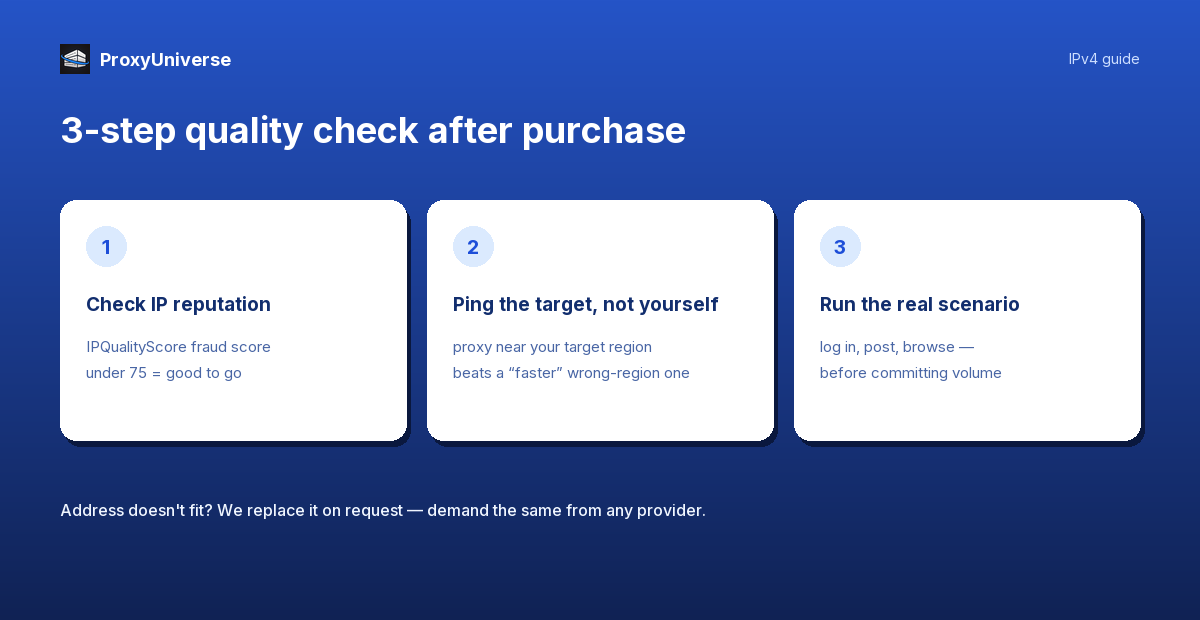
Check the IP against reputation databases like IPQualityScore — a fraud score under 75 works for most tasks.2. Measure ping to your target platform, not to yourself: a proxy in Germany beats a "faster" proxy in the wrong region when your target is German.3. Run your real scenario (login, posting an ad) before committing volume.If an address doesn't fit — we replace it on request. That's standard practice; demand it from any provider.
Bottom line
The formula is simple: persistent address and accounts — dedicated IPv4; bulk scraping — rotating residential by the GB; shared proxies — skip. A dedicated IPv4 from 1 piece at the price of a coffee, with instant delivery and replacement, covers 90% of the tasks people buy proxies for.